


29 May Flowering in the vineyard: the moment that determines the harvest
In the viticultural calendar, there are more showy moments and quieter ones. Flowering belongs to the latter. A few discreet, almost unnoticed days, yet decisive: this is where the foundations of the harvest are laid.
Flowers that don’t look like flowers
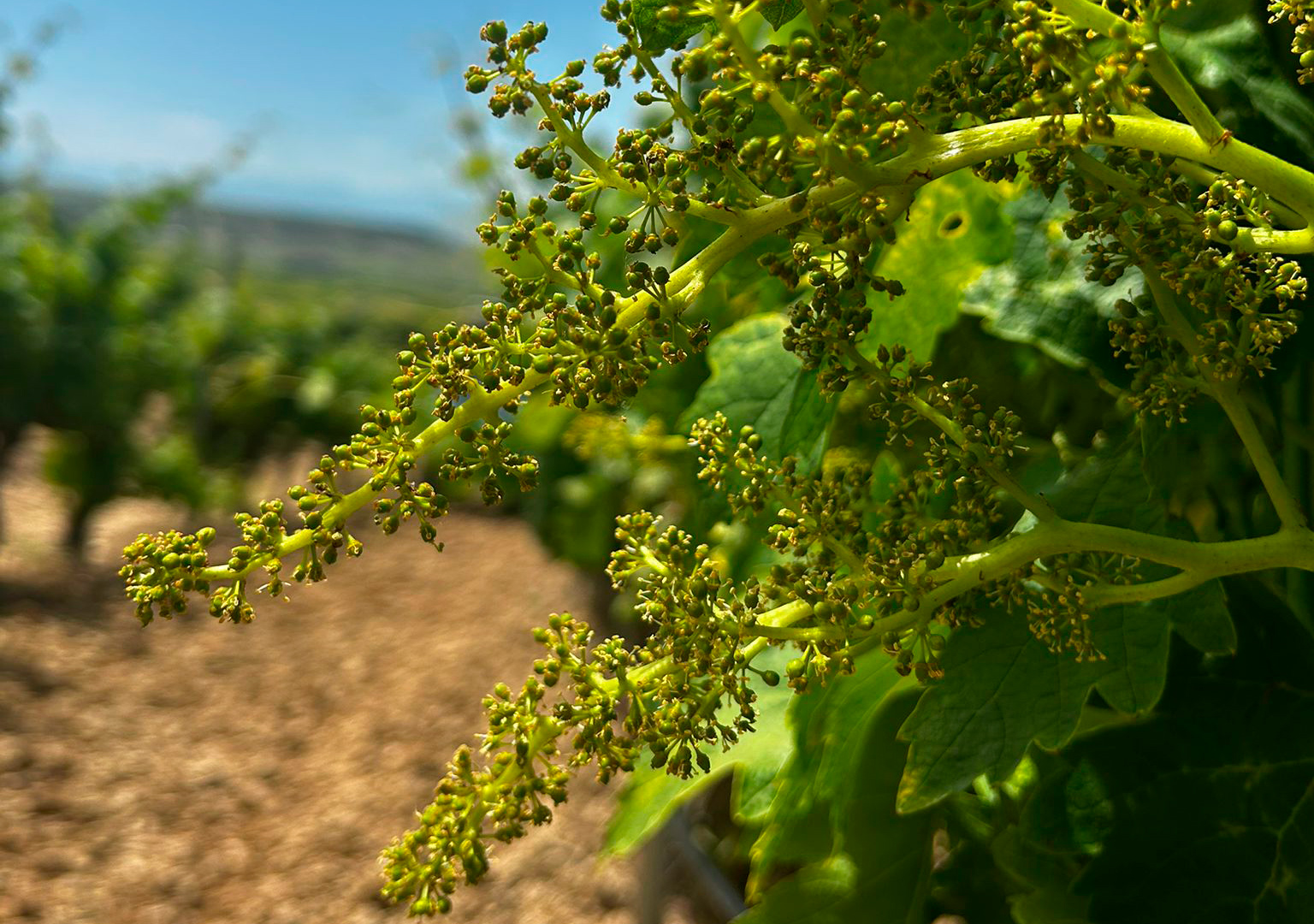
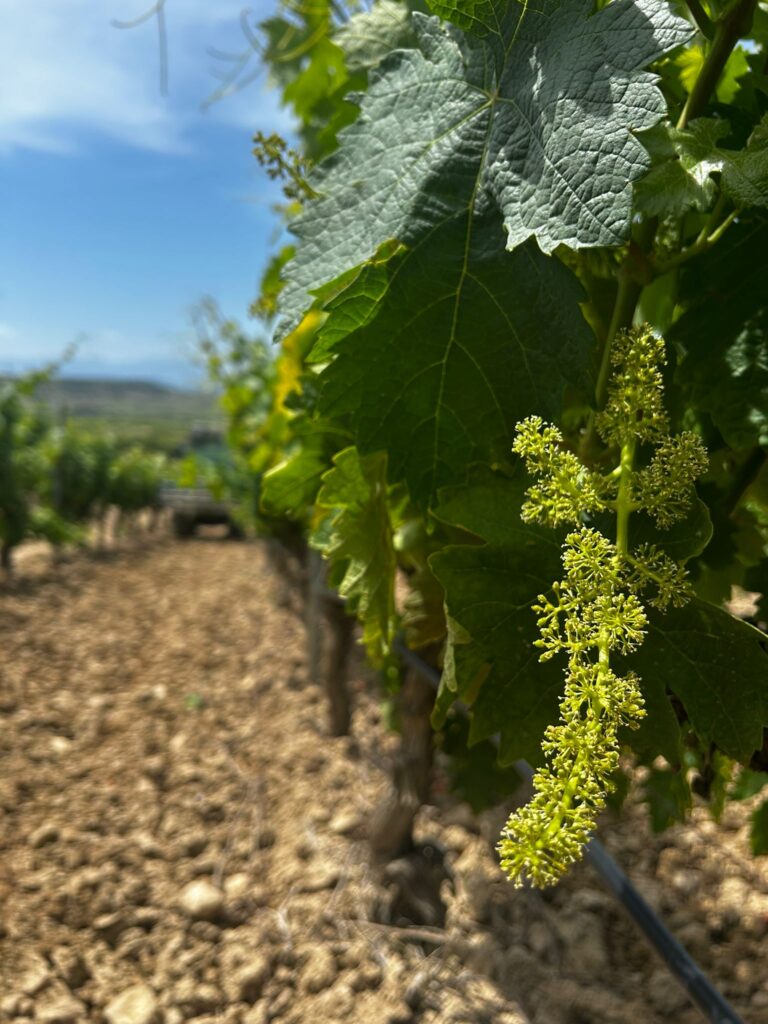
The vine does not bloom like a rosebush. Its flowers are tiny, without showy petals, grouped in small clusters known as inflorescences. What we see in the vineyard these weeks are thousands of minuscule green-yellow spheres—flower buds—that open by shedding their caps and exposing their stamens to the air.
It is not visually spectacular, but those who know the vineyard understand what is at stake during these days.
Why does it matter so much?
Flowering is the bridge between the vine and the future bunch. Each pollinated flower becomes a grape. If the flower does not set—due to cold, heavy rain, excessive wind, or extreme heat—the berry does not form, and the harvest can be seriously reduced.
The winegrower cannot do much during these days. Only observe and respect the plant’s rhythm. It is a moment that requires special attention.
Our vineyards these days
This May has brought contrasts. A cool and sunny start, with typical spring temperatures, has given way to an unusual heatwave for this time of year. In just a few days, the thermometer has risen by almost 20 degrees, creating conditions that are not the most typical during flowering.
Fruit set is progressing, and the first berries are beginning to take shape. But with this early heat, walks through the vineyard are not just for observation—they are also for searching. Bending down, separating leaves, looking closely at what cannot be seen at a glance.
Monitoring is also part of the job
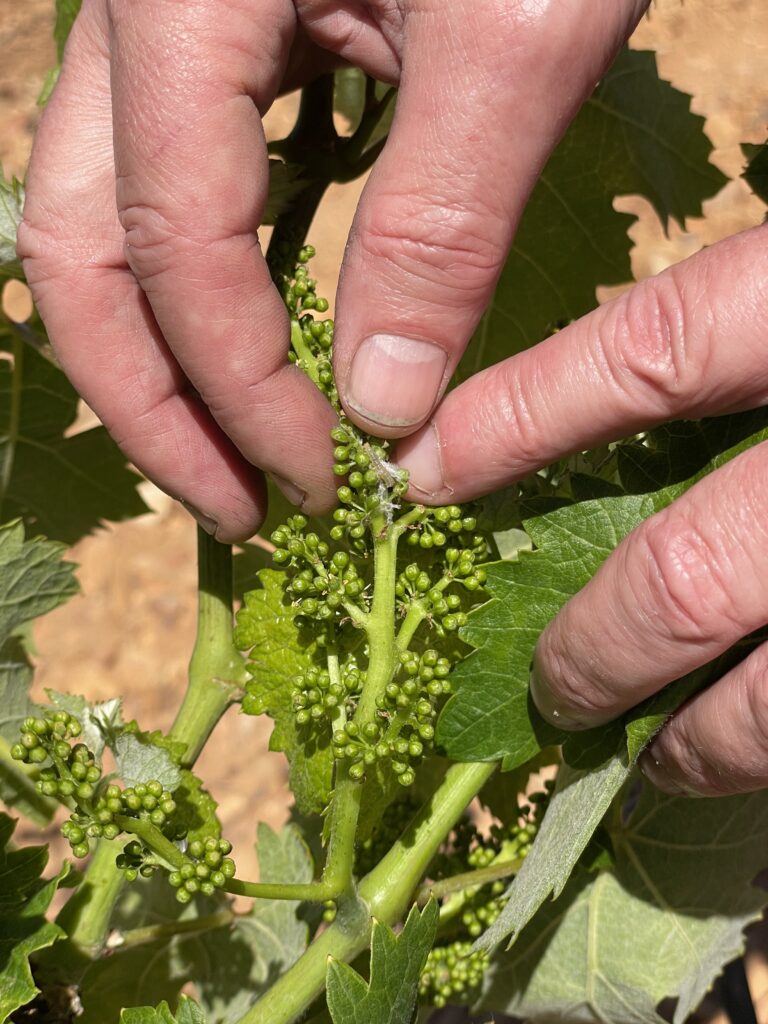
In one of our recent inspections, we found what you see in the photo: a grapevine moth larva (Lobesia botrana) nestled among the newly set berries. A small, almost invisible finding, yet with the potential to cause damage if not detected in time.
The grapevine moth is one of the most significant vineyard pests in Spain. Its first generation coincides exactly with flowering, attacking floral organs and newly formed berries. Detecting it early makes all the difference.
That is why being in the vineyard every day, with eyes wide open, is an essential part of the craft. Knowing each plot well, being present, touching the plants with your hands. When something is detected in time, it can be addressed with good judgment. When it is overlooked, the problem grows unseen.
At Dominio de Berzal, we closely monitor the evolution of each vineyard during these weeks. Not because the situation is worrying—it is not—but because this is how we understand our work: with eyes open and feet on the ground.
Wine begins here
When you uncork a bottle of Dominio de Berzal, at any time of year, what you have in your glass began on days like these. On a May morning, with the sun already high over the vineyards of Rioja Alavesa, hands inspecting cluster by cluster, and thousands of tiny flowers slowly turning into grapes. We like to remember it. And we like to share it with you.